Case study · Solar energy · Mauritius
From first visit to signed quote.
Solarex designs and installs solar and battery systems across Mauritius, from 5 kW homes to 1 MW commercial plants, and has installed more than 20 MW since 2013.
We built its bilingual website and its CRM. A visitor can size a system, book a site survey and accept a quotation online, and the team follows every enquiry on a single record.
- 30pages, each in English and French
- 5questions to a preliminary quote
The brief
Solar is a considered purchase.
Before they speak to anyone, homeowners and businesses want to know what a system will cost, what it will save and what the CEB scheme covers. Every serious enquiry then needs a site survey, a quotation and grid-connection paperwork.
The brief was a website that answers those questions in English and French, and a back office that keeps every enquiry moving from the first visit to a signed quotation.
The journey
Five stages, one flow.
The path a Solarex customer takes, from the home page to an accepted quotation. The screens are from solarex.mu; the quotation is drawn, because real ones carry customer details.
01Arrive
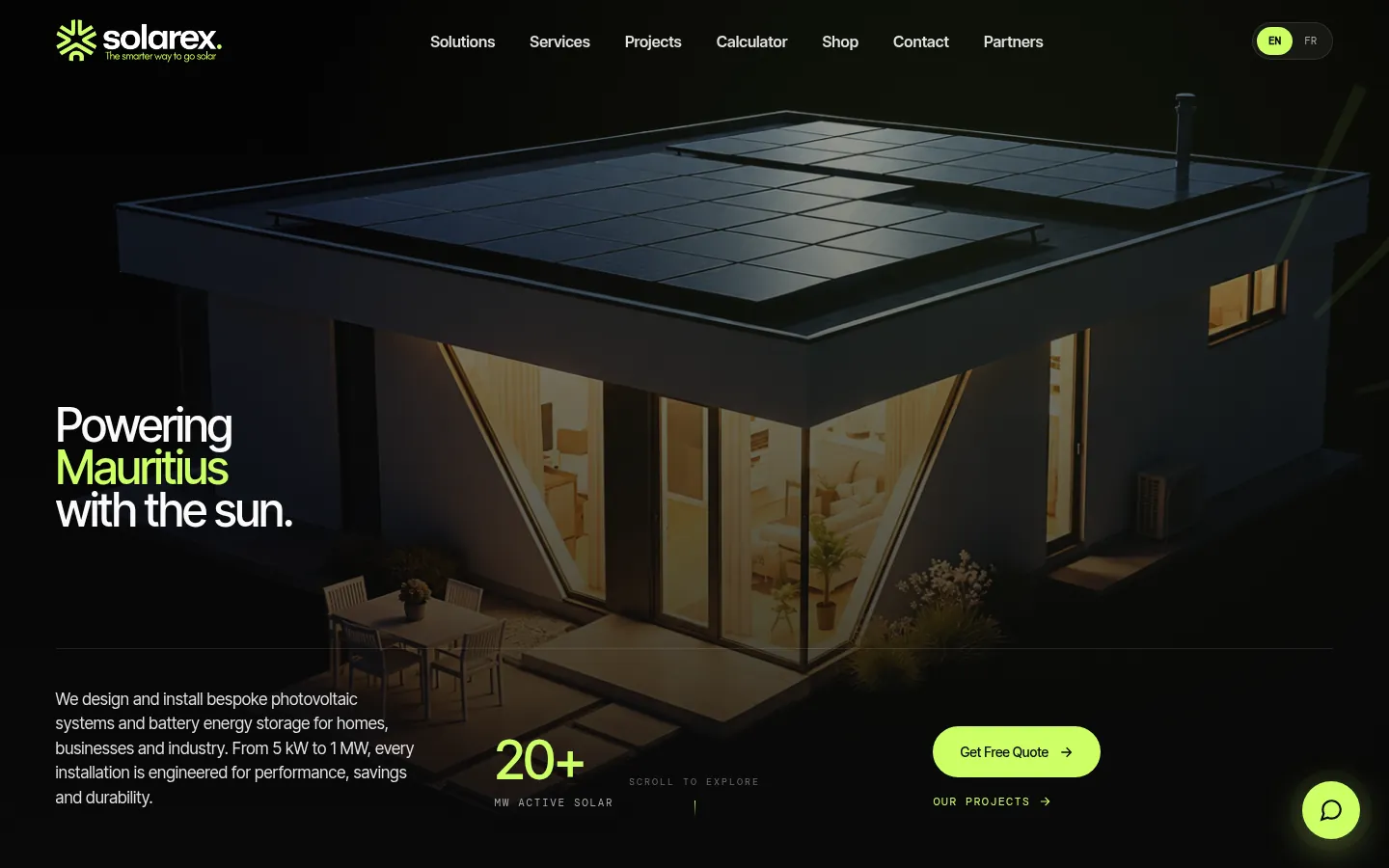
A site that speaks both languages
Thirty pages, each in English and French. The French site is generated from the English source at every build, so the two never drift apart.
Every page carries its own title, description and structured data, and the site publishes an llms.txt file and labelled forms so AI assistants can read it accurately.
Showing the English home page.
The solarex.mu home page. Switch the screenshot language to compare. 02Understand
The CEB scheme, explained
The first question most households ask is what the 2026 CEB solar scheme covers. A dedicated guide explains the grant, the metering options and the battery rules, with the figures taken from the CEB's own scheme page and leaflet.
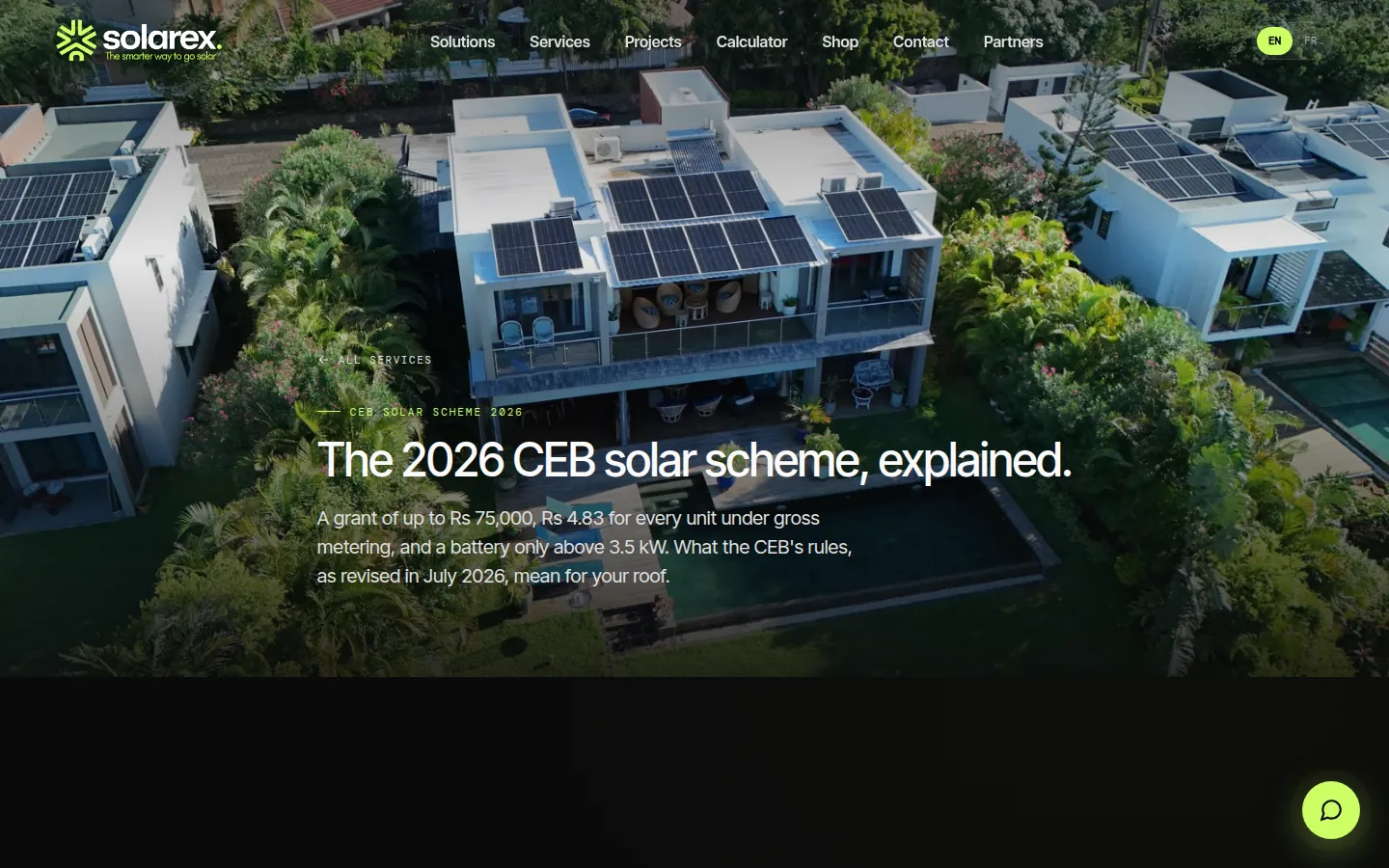
The CEB Solar Scheme 2026 guide. 03Size
A preliminary quote in about a minute
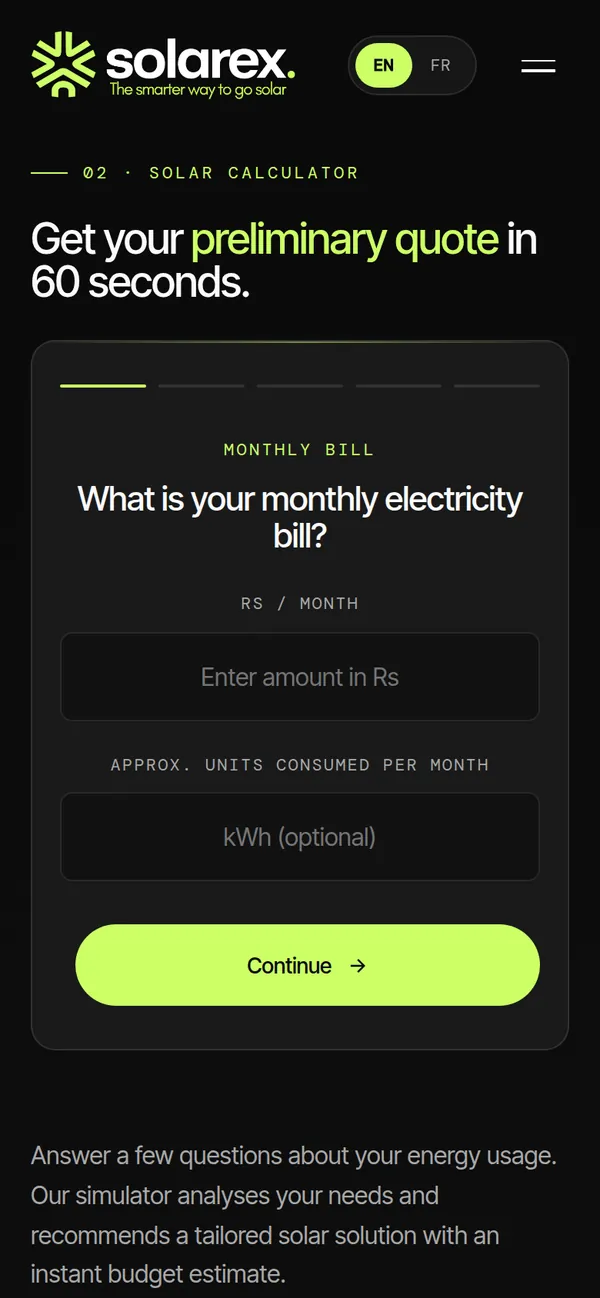
Five questions: the monthly electricity bill, air conditioning, an electric vehicle, the type of property and how the visitor plans to pay.
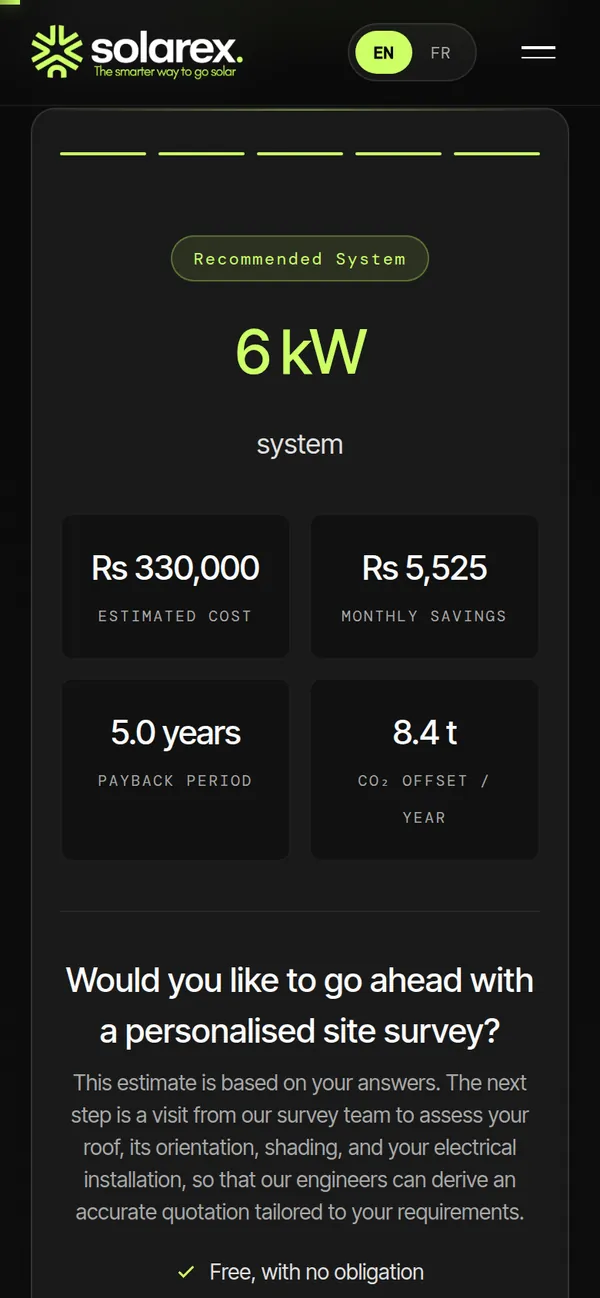
The calculator then recommends a system size and estimates its cost, monthly savings, payback period and CO₂ offset, using Mauritian tariff and solar-yield figures shown on the page.
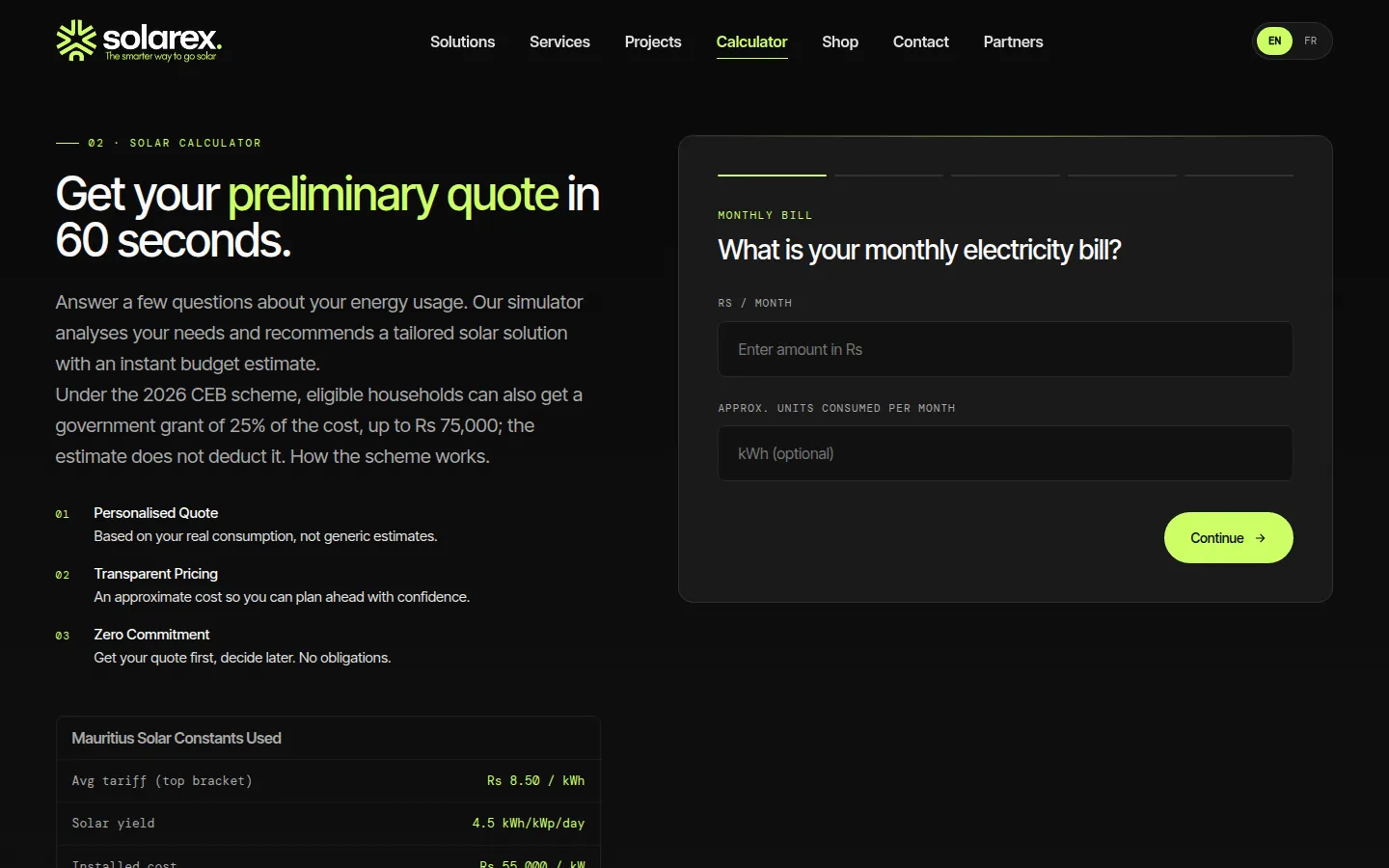
Step one of the five-step calculator. 04Book
From estimate to site survey
The result ends with one question: go ahead with a free site survey, or ask for a quotation without a visit.
Visitors who want a survey pick a day and time from a calendar organised by region. The request reaches the sales team by email, and the visitor receives a confirmation.
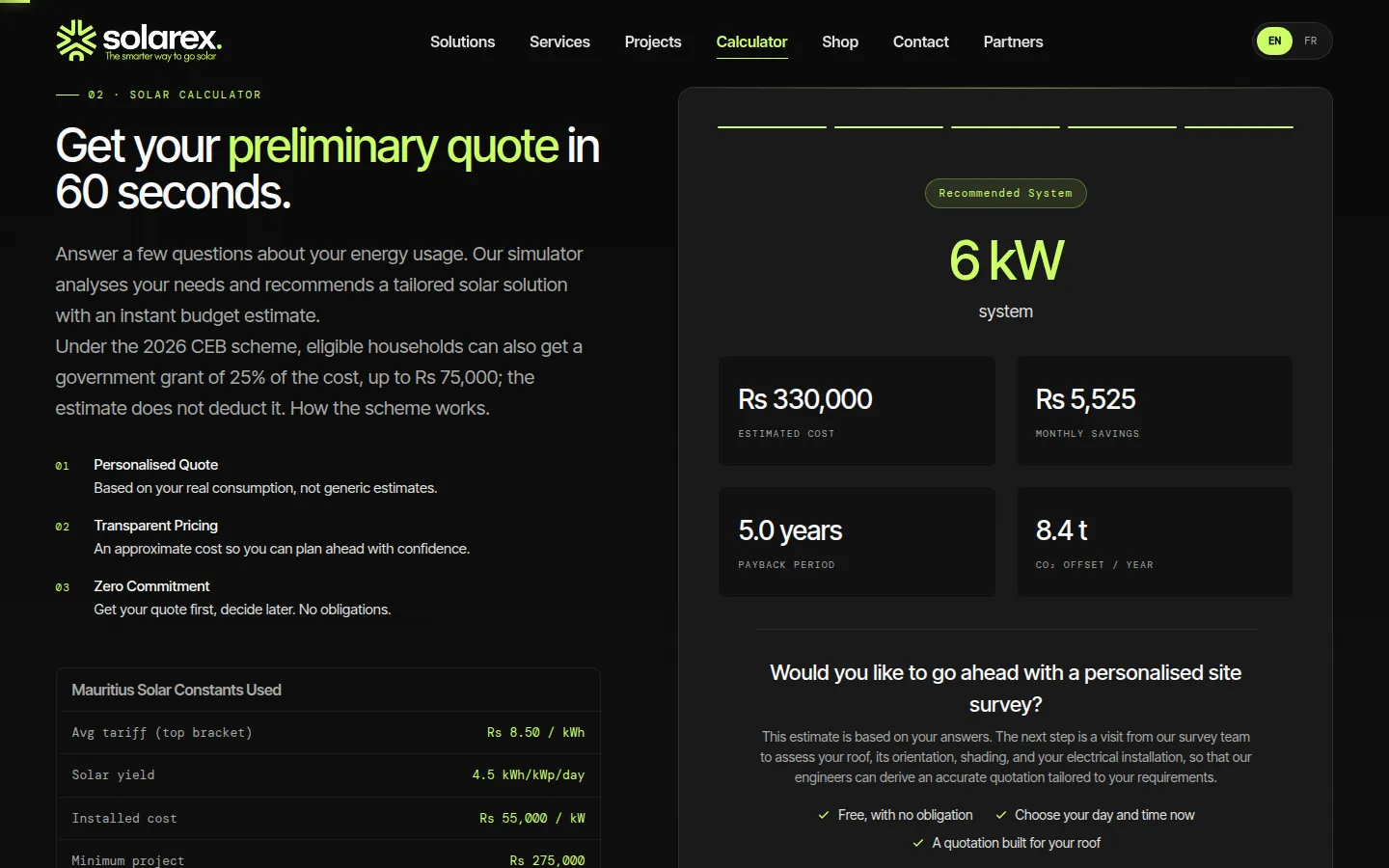
Result for a sample household: Rs 6,500 monthly bill, no air conditioning, no electric vehicle, paying cash. The survey question follows. 05Accept
Quotations customers accept online
After the survey, the team prepares the quotation in the CRM. It goes out as a PDF and as a link where the customer can read it and accept it online.
Sending it by email or WhatsApp is recorded on the customer's record, so everyone can see what went out and when.
QuotationReady to accept- System design
- Panels
- Inverter
- Battery storage
- Total
PDFAccept and signIllustration. Real quotations contain customer details, so they are not shown.
The solarex.mu home page. Switch the screenshot language to compare.
Behind the site
One record, from enquiry to paperwork.
The website is the visible half. The other half is a CRM built around how Solarex sells: enquiries, surveys, quotations and grid-connection forms sit on one customer record that the whole team works from. The steps marked Automatic happen without anyone doing them by hand, and mail goes out from Solarex's own Google Workspace addresses through Google's API.
- 01EnquiryFrom the contact form or the calculator.Automatic Logged in the CRM, emailed to sales, confirmation to the visitor.
- 02SurveyBooked online, then scheduled in the CRM agenda.Automatic Invitations carry a calendar file.
- 03QuotationPrepared in the CRM, sent as a PDF and a link.Automatic The PDF is built from the customer record.
- 04AcceptanceAccepted online by the customer.
- 05PaperworkGrid-connection forms for the CEB.Automatic Pre-filled from the customer record.
We describe what the system does rather than show it: its screens hold customer data.
Also on the site
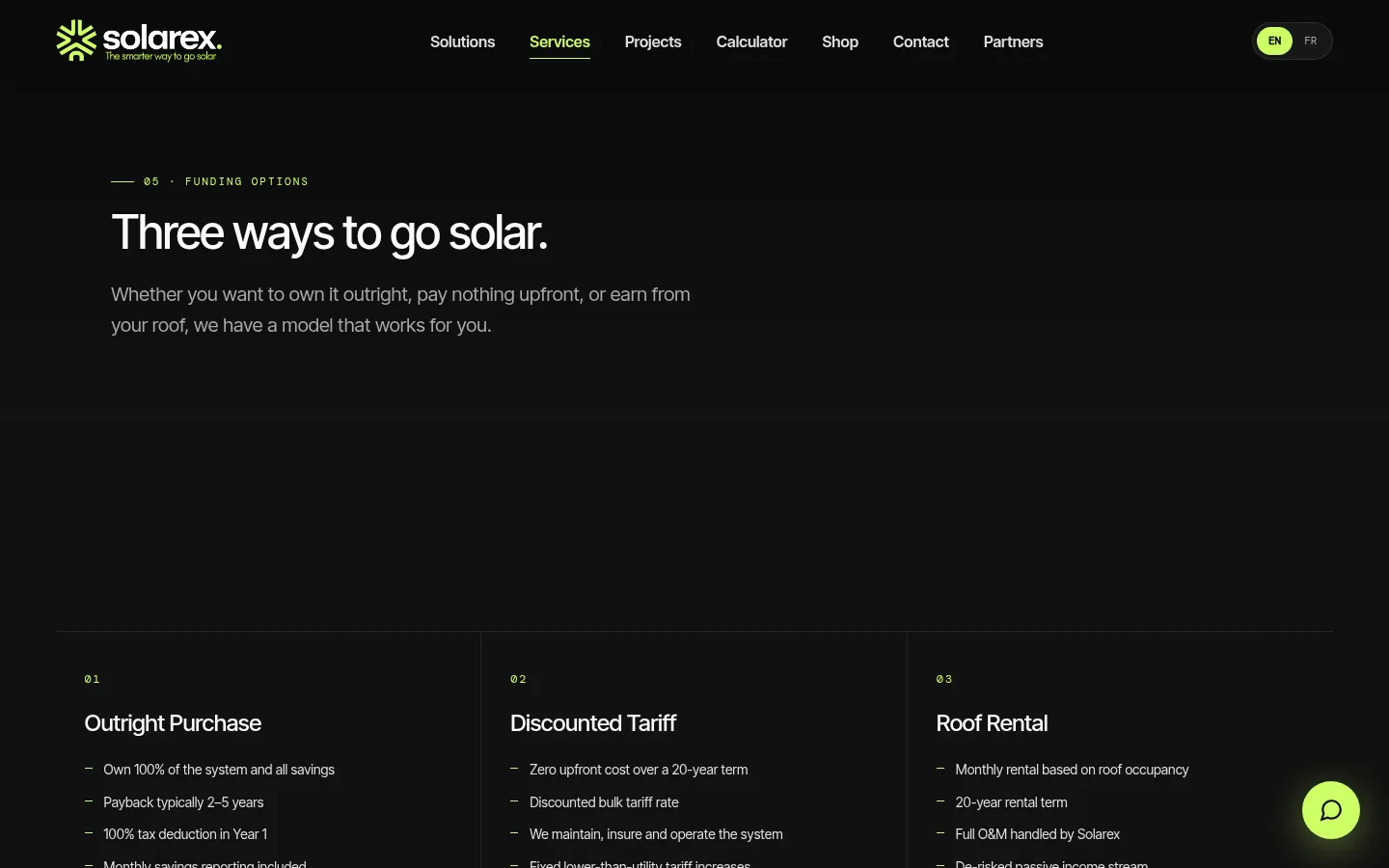
Built for the questions buyers ask.
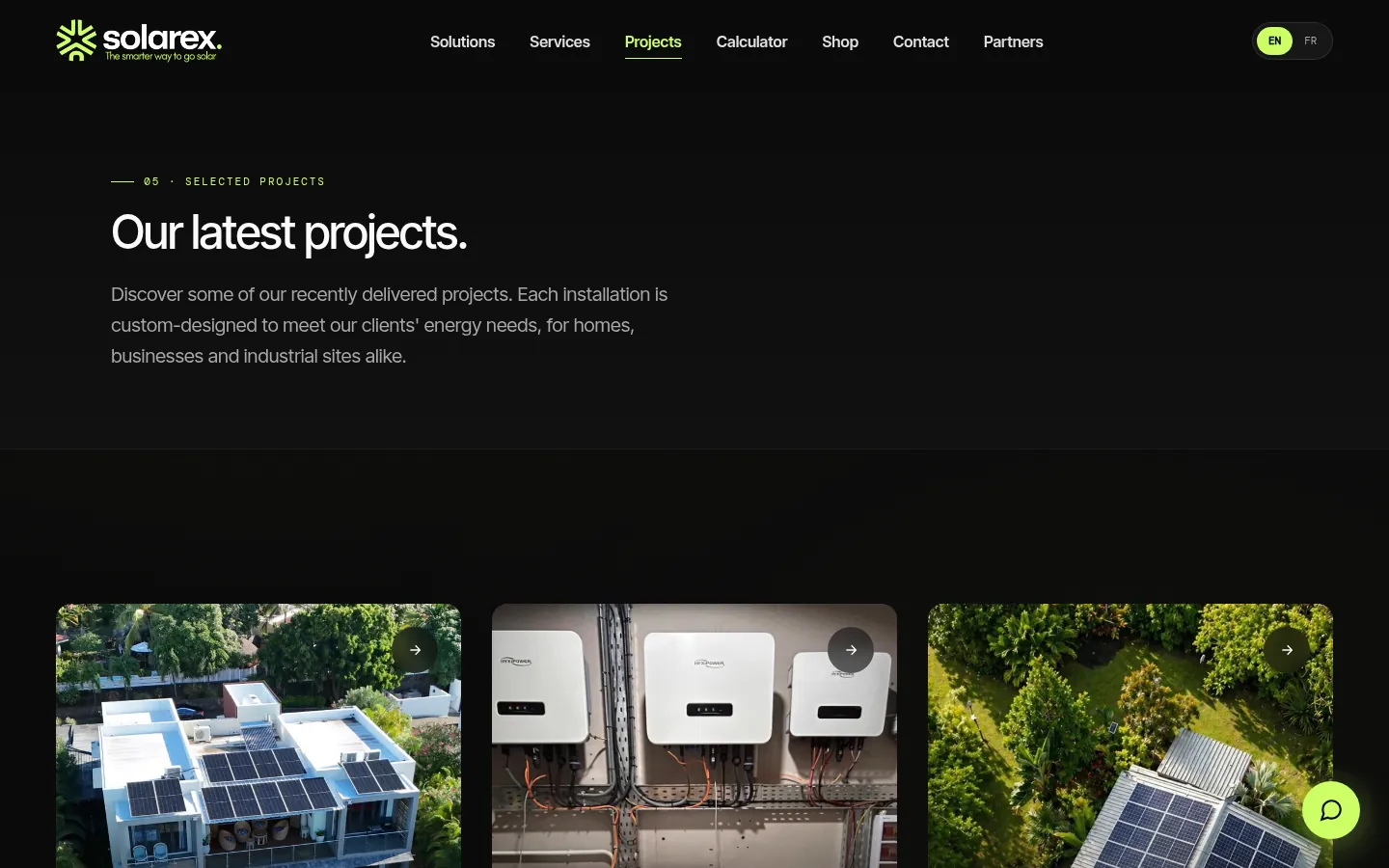
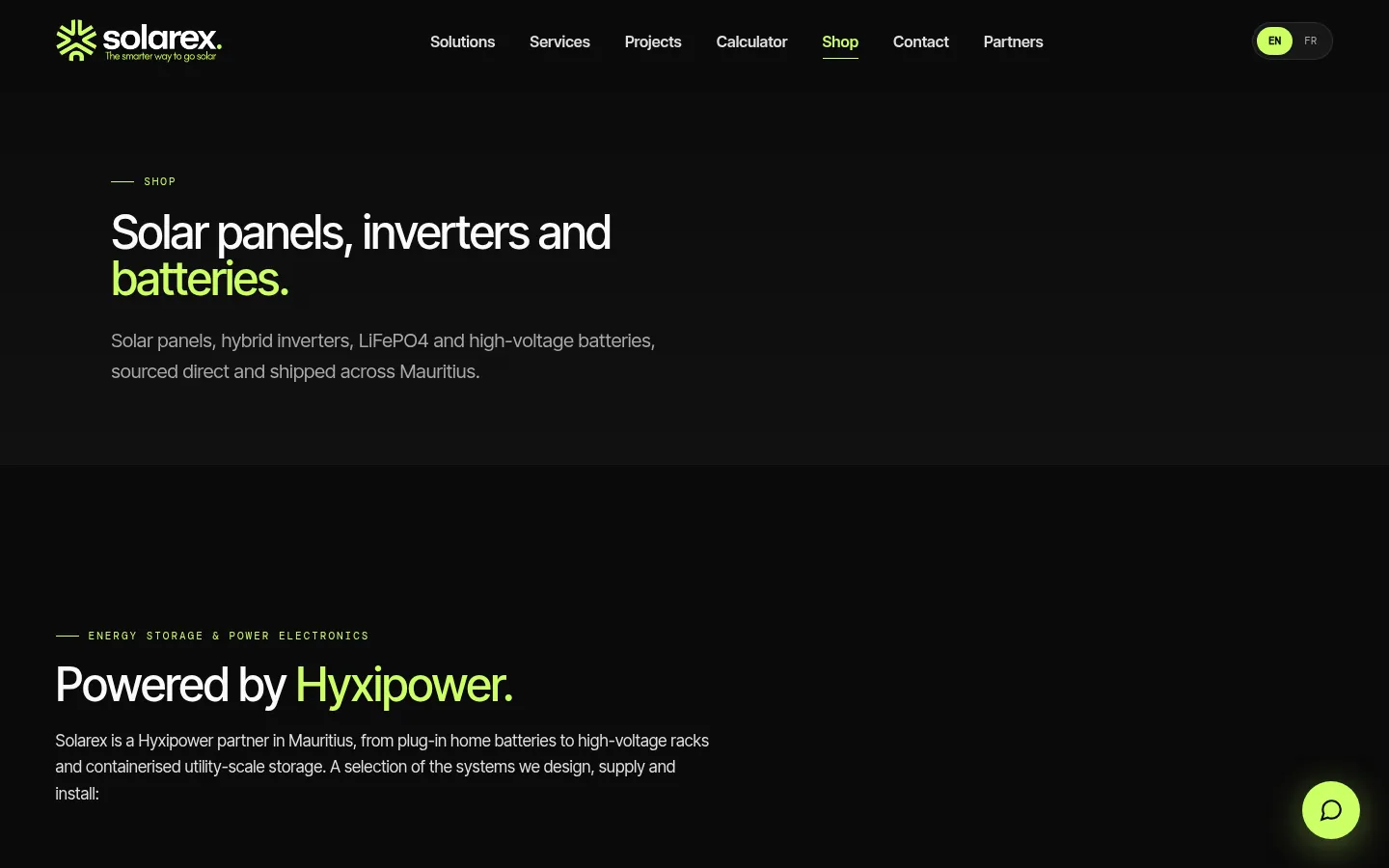

Credits
Scope and stack.
What we delivered
- Art direction and design system
- Bilingual website: 30 pages in English and French
- Five-step solar calculator with survey booking
- CEB Solar Scheme 2026 guide
- Projects, shop, funding and partner programme pages
- Sora, a bilingual guided assistant
- CRM for enquiries, surveys, quotations and paperwork
- SEO, structured data and llms.txt
Built with
- Hand-written HTML, CSS and JavaScript, no framework
- Hosted on Cloudflare
- Build scripts for the French site, SEO tags and sitemap
- Forms labelled for AI agents (WebMCP)
Start a project
Tell us what you need to build.
Start with a 30 to 60 minute call about your business and what you need, with no commitment.
- Port Louis, Mauritius
- English, French and Kreol
- In person or remote